
Quick Takeaway
Primary Insight: A teach-out plan is not an operational courtesy an institution drafts on its own terms. It is a federally defined legal instrument, triggered by specific accreditation and financial events, that an institution must submit to its accreditor for approval.
Best Suited For: Presidents, boards of trustees, CFOs, and general counsel at California colleges facing a sanction, financial distress, or possible closure.
When a college is heading toward closure, the teach-out plan is often handed to the registrar or an operations team as a logistical task: figure out how current students finish their degrees. Treating it that way is a mistake. A teach-out plan is a regulated legal document with defined triggers, required contents, and direct consequences for students' federal loan rights and the institution's own liability.
Federal regulation defines what a teach-out plan is, lists the events that force an institution to file one, and dictates what it must contain. The accreditor, often for Private and Post-Secondary Education (“BPPE”), not the institution, decides whether the plan is adequate. And in California, a closing institution carries additional record-transfer duties on top of the federal rules. Getting any of this wrong does not just inconvenience students: it can expose the institution and its governing Board to claims and strip students of loan-discharge rights they would otherwise have.
This post explains what a teach-out plan legally requires, what triggers the obligation, and where higher education compliance counsel belongs in the process. The audience is the institution and its leadership, because they are the parties the rules hold responsible.
Teach-out plan vs. teach-out agreement
A teach-out plan and a teach-out agreement are two different instruments, and the distinction is defined in federal regulation at 34 CFR 600.2. Confusing the two is one of the most common errors institutions make when a closure looms.
| Teach-out plan | Teach-out agreement | |
|---|---|---|
| Who creates it | A single institution develops it | Two institutions sign it: the closing school and a receiving "teach-out" school |
| What it is | A written plan for the equitable treatment of students if the institution or a location ceases to operate | A binding arrangement giving students a reasonable opportunity to complete their program at another institution |
| When it arises | Earlier: triggered by accreditors, financial, or Title IV events | When an actual partner school will finish teaching the enrolled students |
| Approval | Submitted to the accreditor for approval | Also evaluated and approved by the accreditor |
What a teach-out plan legally requires
A teach-out plan is a written plan, developed by an institution, that provides for the equitable treatment of students if the institution or a location that offers 100 percent of a program ceases to operate before enrolled students finish their coursework. The institution prepares and submits it; students do not file anything, and the accreditor must approve it.
Under 34 CFR 602.24(c), the accrediting agency evaluates the plan to confirm it accounts for the students who are actually enrolled and the programs they need to complete. The plan must identify the currently enrolled students, the academic programs the institution offers, and other institutions offering similar programs that could potentially enter into a teach-out agreement. The standard the plan is measured against is equitable treatment of students, not administrative convenience for the institution.
Because the accreditor holds approval authority, a plan assembled without regard to the regulatory criteria can be rejected, which delays closure, compounds the institution's financial exposure, and leaves students in limbo. The plan is a legal filing, and it should be prepared like one.
What triggers the obligation to file a teach-out plan
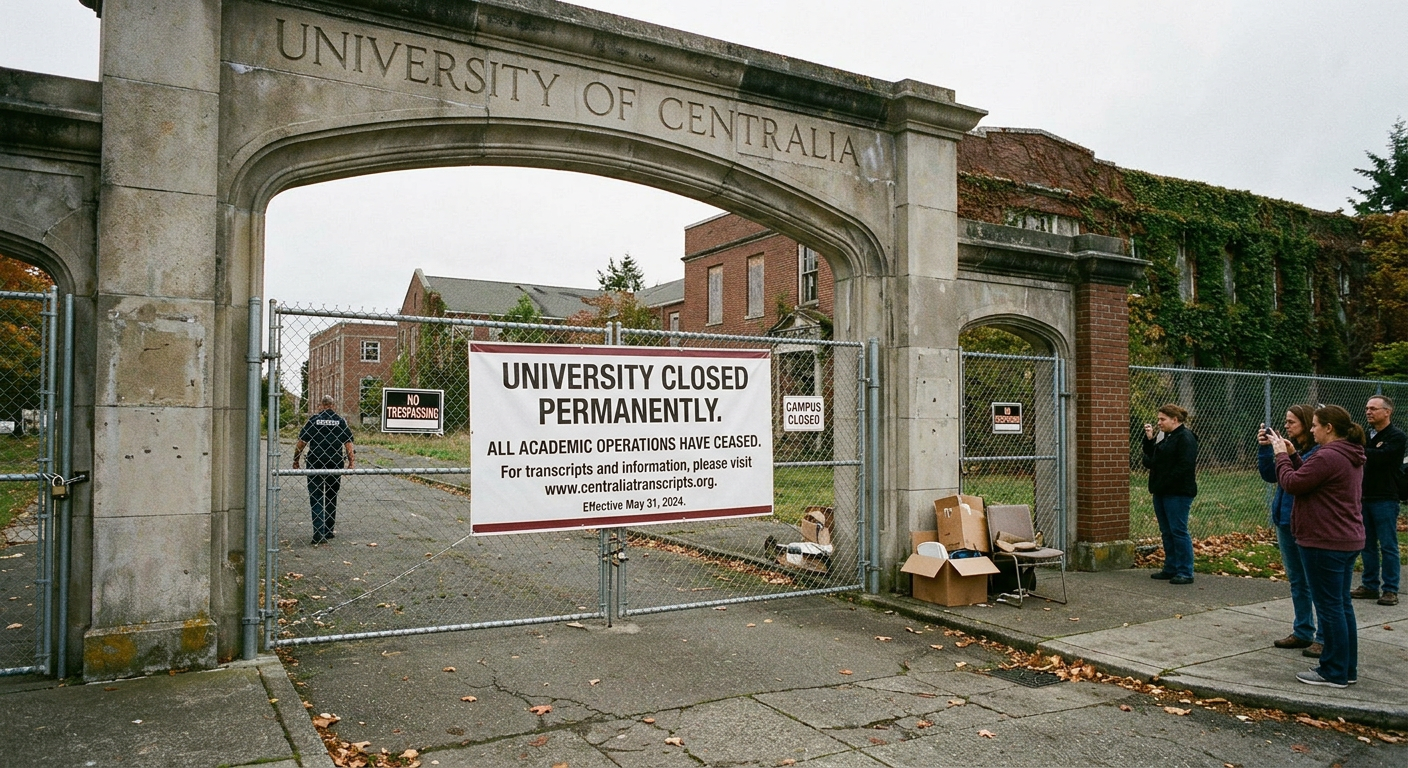
An institution does not get to decide when a teach-out plan becomes necessary. Federal regulation lists the events that require one, and they fall into two tiers under 34 CFR 602.24(c). The first tier requires a plan; the second requires a plan and, where practicable, teach-out agreements.
Tier one: events requiring a teach-out plan
- Going-concern or financial findings: the Secretary of Education notifies the accreditor of an auditor's going-concern doubt, an adverse opinion, or a material-weakness finding on the institution's financial stability.
- Probation or equivalent: the accreditor places the institution on probation or an equivalent status.
- Provisional Title IV status: the institution is on a provisional program participation agreement and the Secretary required a teach-out plan as a condition.
Tier two: events requiring a plan and, if practicable, agreements
- Heightened federal monitoring: the Secretary places the institution on reimbursement or heightened cash monitoring 2 payment status.
- Title IV enforcement: the Secretary initiates an emergency action or an action to limit, suspend, or terminate Title IV participation.
- Loss of accreditation: the accreditor acts to withdraw, terminate, or suspend the institution's accreditation or preaccreditation.
- Notice of closure: the institution tells the accreditor it intends to cease operations or to close a location that provides 100 percent of at least one program.
- State license revocation: a state licensing or authorizing agency notifies the accreditor that the institution's license has been or will be revoked.
California adds its own closure duties
A California institution that closes carries record-transfer obligations under state law on top of the federal teach-out rules, and for many private postsecondary schools those duties run to the BPPE. California Education Code Section 94927.5 requires a closing institution to deliver student records to the BPPE before it shuts down.
Under California Education Code Section 94927.5, a closing institution must provide the BPPE with copies of pertinent student records, including transcripts, in hard copy or electronic form. An accredited institution must also submit a records retention plan, approved by its accrediting agency, explaining how a former student can later obtain a transcript or verify completed coursework and degrees. Notably, this obligation reaches institutions that are otherwise exempt from BPPE approval to operate.
These state duties interlock with the federal ones. The same closure that triggers a federal teach-out plan also triggers California record-preservation requirements, and the BPPE regulations that govern private postsecondary institutions should be mapped against the federal timeline so nothing falls through the gap between the two frameworks.
Steps Institutions Should Take During a Wind Down
- Convene the Board and legal counsel immediately;
- Confirm which trigger applies and which tier it falls under;
- Inventory currently enrolled students and their programs;
- Identify other institutions offering comparable programs for potential teach-out;
- Draft the teach-out plan against the accreditor's own standard;
- Build the California records-transfer plan alongside it;
- Prepare student notices on loan-discharge rights;
- Submit the plan to the accreditor and track its approval; and
- Document the Board's decisions at each step
Frequently asked questions about teach-out plans
What is a teach-out plan?
A teach-out plan is a written plan an institution develops to provide for the equitable treatment of its students if the school, or a location offering an entire program, stops operating before students finish. The institution submits the plan to its accrediting agency for approval, and it is defined in federal regulation at 34 CFR 600.2.
What is the difference between a teach-out plan and a teach-out agreement?
The difference between a teach-out plan and a teach-out agreement is who makes it and what it does. A teach-out plan is developed by a single institution as a roadmap for protecting students during a wind-down, while a teach-out agreement is a binding arrangement between the closing school and a receiving school that will actually finish teaching the enrolled students. An accreditor approves both.
When is a college required to submit a teach-out plan?
A college is required to submit a teach-out plan when specific events occur, not when it chooses to. Federal regulation lists the triggers, including being placed on probation by an accreditor, an accreditor action to withdraw or suspend accreditation, notifying the accreditor of an intent to close, certain federal financial-monitoring actions, and a state moving to revoke the school's license.
Who is responsible for a college's teach-out plan?
Responsibility for a college's teach-out plan sits with the institution and its leadership, not with students. The administration prepares and submits the plan, and the governing board carries fiduciary responsibility for an orderly closure, which is why boards and general counsel, not just operational staff, should be involved from the first triggering event.
Protecting the Institution During a Wind-Down
A closure is the point at which an institution's legal obligations to its students, its accreditor, and the state all come due at the same moment. The teach-out plan is where those obligations are reconciled, and it is treated by regulators as a measure of whether the institution acted responsibly on the way out. Handled well, it protects students' ability to finish or to recover their loans, and it protects the board from claims that the wind-down was mishandled.
Shankar Legal Inc. advises California colleges and their boards on accreditation, closure, and compliance, including the interlocking federal and state duties a teach-out sets in motion. If your institution is facing loss of accreditation, financial distress, or a possible closure, contact Shankar Legal Inc. to build the teach-out and closure strategy before a triggering event forces the timeline.